What's the goal here?
To make cities inclusive, safe, resilient and sustainable.
The United Nations' Sustainable Development Goal 11 is about making cities inclusive, safe, resilient and sustainable. Here is what that means, why it matters, and how it shapes the way we plan communities.
Half of humanity already does. The way those cities are planned will decide how well people live in them.
Taken from the UN's own explainer on Sustainable Cities.
To make cities inclusive, safe, resilient and sustainable.
Half of humanity, 3.5 billion people, live in cities today, and this number will continue to grow.
Because the future will be urban for a majority of people, the solutions to some of the greatest issues facing humans (poverty, climate change, healthcare, education) must be found in city life.
Inequality is a big concern. 833 million people live in slums and this number keeps rising.
The levels of urban energy consumption and pollution are also worrying. Cities occupy just 3 per cent of the Earth's land, but account for 60-80 per cent of energy consumption and 75 per cent of carbon emissions.
Many cities are also more vulnerable to climate change and natural disasters due to their high concentration of people and location, so building urban resilience is crucial to avoid human, social and economic losses.
All these issues will eventually affect every citizen. Inequality can lead to unrest and insecurity, pollution deteriorates everyone's health and affects workers' productivity and therefore the economy, and natural disasters have the potential to disrupt everyone's lifestyles.
The cost of poorly planned urbanization can be seen in some of the huge slums, tangled traffic, greenhouse gas emissions and sprawling suburbs all over the world. Slums are a drag on GDP, and lower life expectancy.
By choosing to act sustainably we choose to build cities where all citizens live a decent quality of life, and form a part of the city's productive dynamic, creating shared prosperity and social stability without harming the environment.
The cost is minimal in comparison with the benefits. For example, there is a cost to creating a functional public transport network, but the benefits are huge in terms of economic activity, quality of life, the environment, and the overall success of a networked city.
Take an active interest in the governance and management of your city. Take notice of what works, and what doesn't, in your community. Advocate for the kind of city you believe you need.
Develop a vision for your building, street and neighbourhood, and act on that vision. Ask yourself:
The better the conditions you create in your community, the greater the effect on quality of life.
Source: United Nations Sustainable Development Goals, Goal 11. More at un.org/sustainabledevelopment.
Homes, markets, schools, care and jobs planned together. Tap any flyer to see it full size.
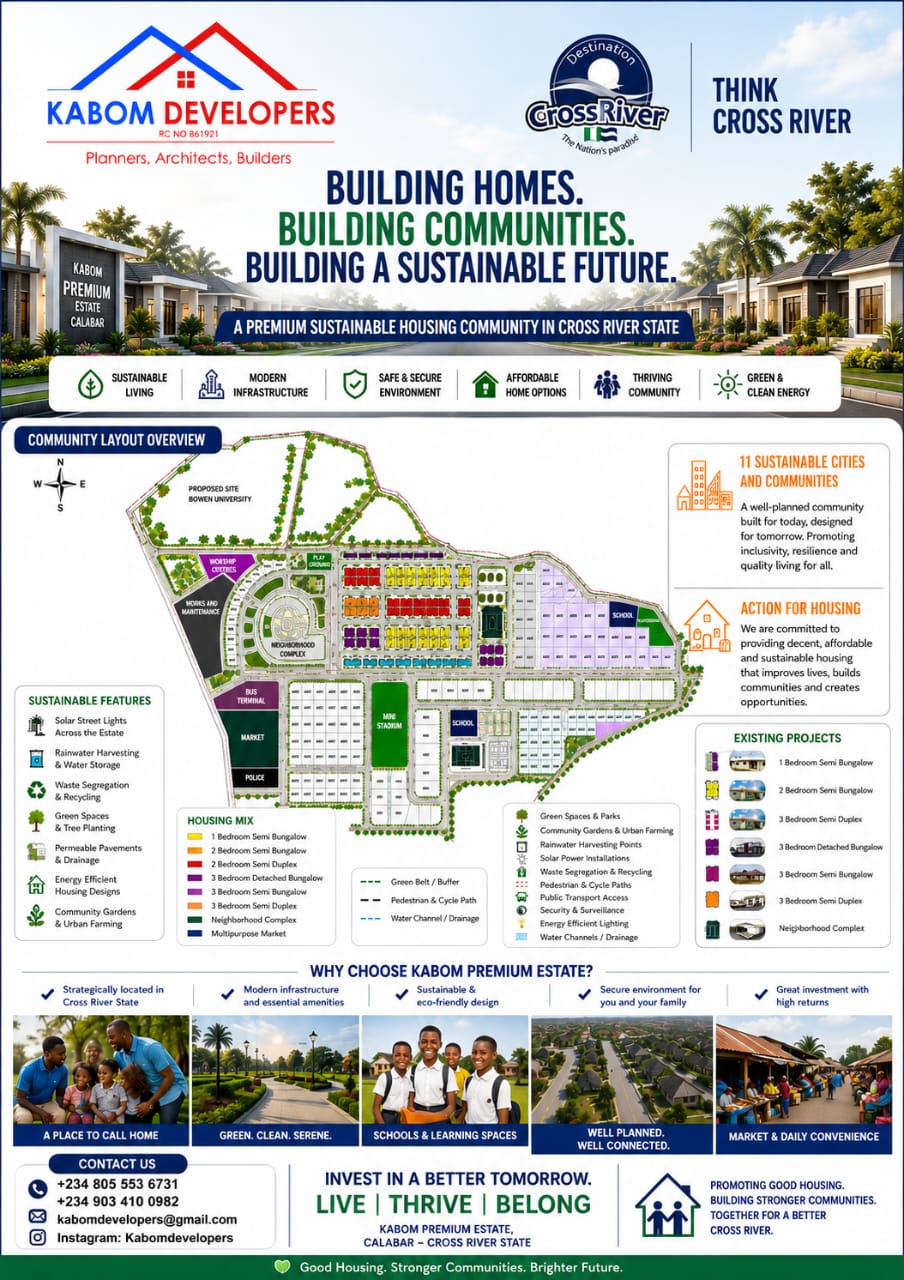
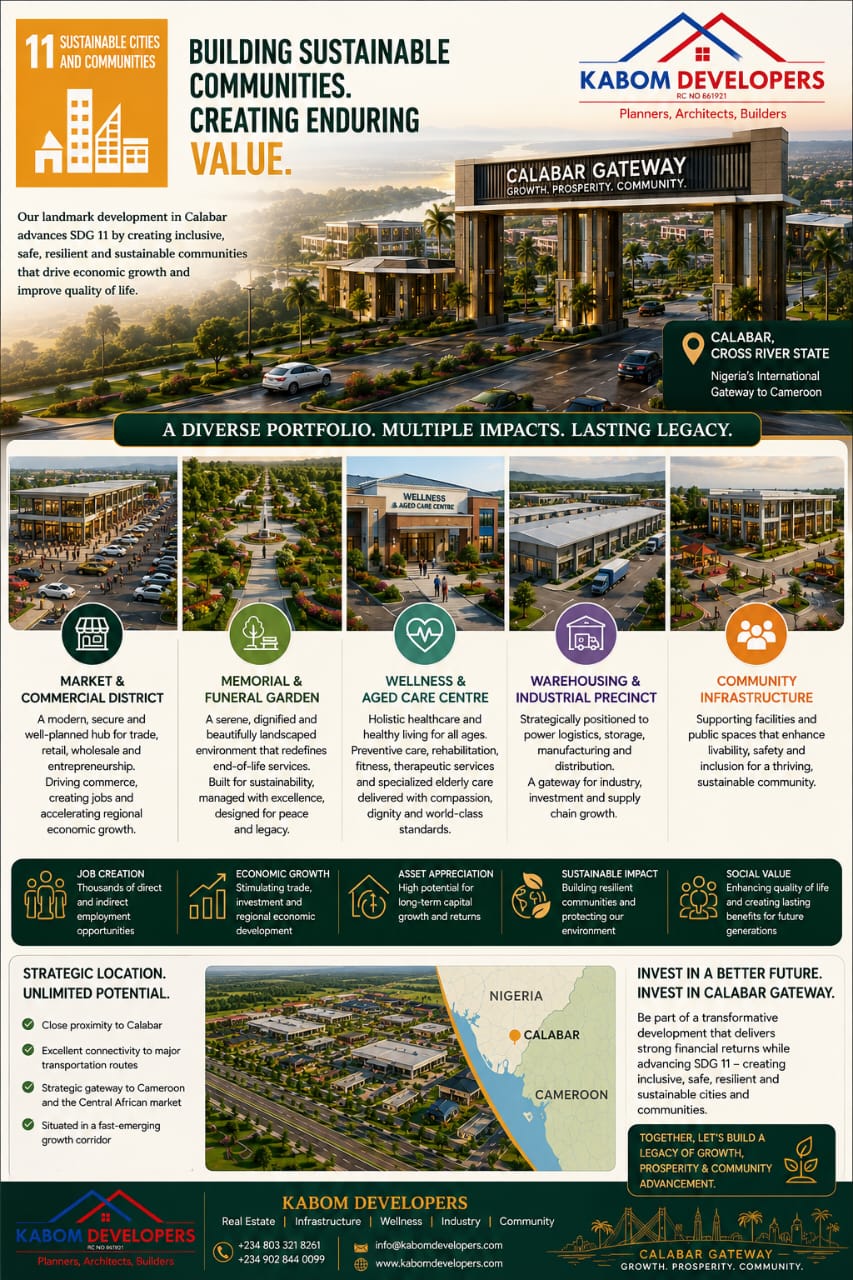
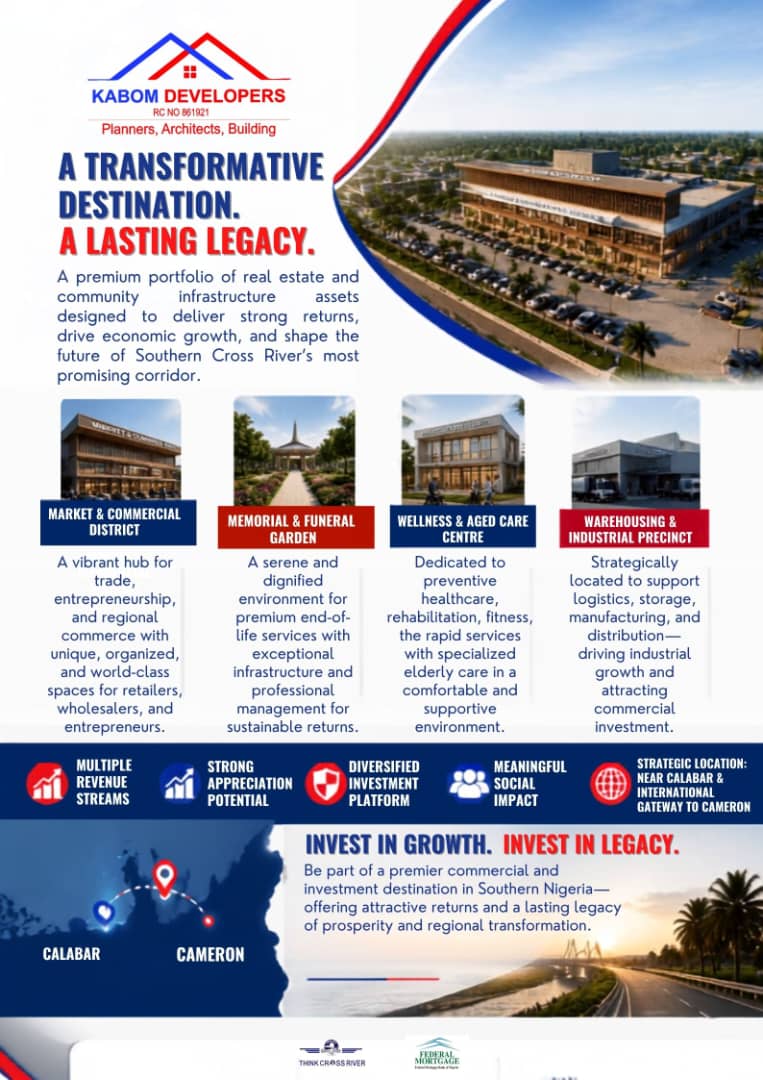
Tell us whether you're looking for a home, a plot or a place to invest, and the team will take it from there.
Talk to Kabom Developers →